Phone Tracker: Phone Locator
- 4.1
- Rating
- 10.00M
- Installs
- Free
- Price
 Analysis by App-foxy
Phone Tracker: Phone Locator is the kind of Maps & Navigation app that sounds simple until you think about the situations in which you might actually need it. I looked at it as a practical phone-location tool rather than as a replacement for a full navigation service, and my impression is mixed in a useful way: it can be approachable for people who want a focused way to think about locating a phone or protecting family members, but it also requires careful attention to privacy, permissions, and the limits of phone-number-based tracking.
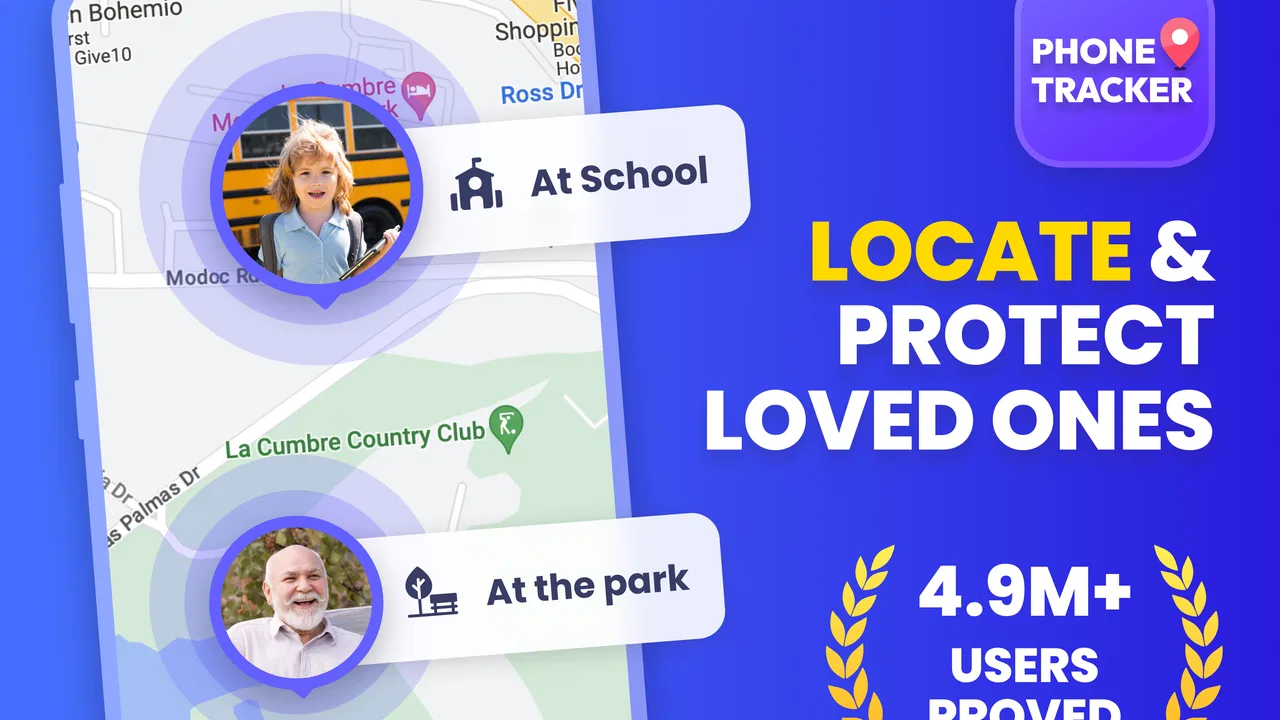
The app is free, aimed at Everyone, and comes from the developer QR Code Scanner. Its store summary presents it as an all-in-one phone location tracker, while the shorter store description reduces that idea to “Phone Tracker.” That difference matters. The short wording makes the app sound almost effortless, but location tools are only helpful when the people involved understand what is being shared and how the process works.
How the app feels to use in everyday situations
I find the everyday value of a phone-location tool depends less on the map itself than on whether everyone understands the routine before they need it. In this section, I’d focus on making that routine easy to remember: agree on who may request a location, what the result is meant to help with, and what to do if it doesn’t answer the immediate question. That preparation also makes it easier to judge whether the app fits your family’s needs.
You May Also Like

 Pandora - Music & Podcasts
Pandora’s Music Is Easy to Start, but Harder to Recover
Pandora’s strength is its low-effort path from a seed to a station. Its weak spot is how much confidence it asks you to place in connection, setup, and quiet recovery.

 8 Ball Pool
 Is Built on Rivalries, Rematches, and Routine
A close look at the rivalries, rematches, shared routines, and unanswered safety questions that turn a quick pool match into a persistent mobile community.

 Samsung Music
’s Quiet Strength Is Playing What You Already Own
Its reach comes less from spectacle than from dependable access to a personal library. That simplicity is both the app’s strongest retention engine and its ceiling.

 AccuWeather: Weather Radar
AccuWeather Review: A Quick, Clear Forecast for Everyday Decisions
For everyday plans, the best forecast is the one you can understand quickly. AccuWeather makes rain timing, radar, and local conditions easy to act on, with a few trade-offs.

 Hill Climb Racing
Why Hill Climb Racing Still Turns Crashes Into One More Run
A tiny car, a bumpy hill and one more upgrade: Hill Climb Racing keeps resurfacing because its simple chaos makes every near-miss feel personal.

 AliExpress - Shopping App
AliExpress Makes Global Shopping Feel Personal, but Shoppers Bear the Risk
AliExpress turns a global marketplace into a pocket-sized discovery engine. Its reach is useful, its shopping loop compelling, and its trade-offs easy to miss.
More From Our News Desk
View All News


Readability and navigation come first
My first concern with a utility like this is not how many options it offers, but whether I can understand the next step without studying a manual. A location app may be opened during a stressful moment: a family member is late, a phone has been misplaced, or someone wants reassurance that another person reached a destination. In those situations, clear labels and a predictable path are more valuable than a crowded screen.
Phone Tracker: Phone Locator is best approached with a simple mental model: identify the phone or person you are trying to locate, follow the app’s requested process, and check the resulting location information. I would not treat it as a conventional map application with the same depth as a dedicated navigation platform. Its purpose is narrower, and that can be a benefit for someone who finds large mapping apps overwhelming.
For readers who rely on larger text, screen magnification, or high-contrast display settings, the practical test is whether important controls remain understandable after the system enlarges the interface. I recommend increasing text size before setting up the app, rather than after an urgent situation begins. If labels become truncated or controls move unexpectedly, the app may become difficult to operate even if the original layout looked tidy.
The most useful habit is to complete the setup while everyone is calm. That means checking how a location request is made, confirming which person is involved, and learning where the result appears. A family member with limited vision, reading difficulty, or memory challenges should not be expected to discover the workflow during an emergency.
Motor and sensory considerations
Location tools often involve several small actions: entering information, selecting a contact or device, approving a request, and interpreting a map or location result. For a user with tremors, reduced dexterity, or difficulty with precise taps, that sequence can create friction. I would use the app with the phone placed on a stable surface and avoid trying to complete setup while walking, driving, or carrying bags.
Voice input from the operating system may help with typing, but it does not remove the need to review what was entered. A wrong digit or incorrectly selected contact can lead to confusion, especially when the app’s central task depends on identifying the right phone. Large system text can also make reading easier, although it is worth checking that buttons remain visible and that no important instruction is hidden below the fold.
For people with hearing loss, a location app is more comfortable when the essential result is visible rather than communicated only through sound. I would not rely on an alert tone as proof that a request worked. Instead, I would look for an on-screen confirmation and make sure the person using the other phone knows what to expect. Likewise, users with low vision should not assume that a map alone is sufficient; an address, place label, or readable status is easier to interpret than a small marker.
Color perception is another practical issue. A map marker or status color should never be the only clue that a location is current, pending, or unavailable. If the app presents information mainly through color, I would want an accompanying word or symbol. This is not a claim that the app lacks such labels; it is simply the check I would make before depending on it for someone who cannot distinguish certain colors easily.
Situational access is where the app can be genuinely useful
The strongest use case I can imagine is a family routine that needs occasional reassurance rather than constant surveillance. For example, suppose an older relative is traveling home after an appointment and has difficulty explaining their location over the phone. Setting up the process beforehand could give another family member a simpler way to help locate the phone when the relative agrees to it. The value is not just the map; it is reducing the amount of verbal explanation needed at a stressful time.
Another scenario is a misplaced phone in a familiar building. A focused tracker may feel less intimidating than opening a broad navigation service and searching through unrelated features. Still, the phone must be powered, connected in the way the service expects, and configured appropriately. I would never present any phone tracker as a guarantee that a lost device can always be found.
People with cognitive disabilities may benefit from a prepared routine with one trusted helper, a clearly named contact, and written instructions in plain language. The helper should explain what the app does before using it, not simply install it on someone else’s phone. Rehearsing the process once can reveal whether the user understands the request, knows when location sharing is active, and can stop participating when they choose.
Situational access also includes poor connectivity, unfamiliar surroundings, and low battery. A person may be able to use the app at home but struggle when traveling, underground, or in a crowded place. I would pair it with ordinary safety habits: carry a charged phone, keep emergency contacts available, and agree on a backup method such as a phone call or text message. The app should support a plan, not become the entire plan.
Privacy is part of inclusive access
Accessibility is not only about buttons and text. A tool is less inclusive if a user cannot understand who may see their location or feels pressured to share it. Phone Tracker: Phone Locator is designed around locating phones and protecting family, so the consent conversation should happen before the first request. Every participant should know which device is involved, what the location information is for, and when the arrangement ends.
This is especially important for children, older adults, people receiving care, and anyone in a relationship where control may be an issue. A family-safety purpose does not automatically make every tracking situation appropriate. I would avoid installing a tracker secretly or using it to monitor an adult who has not agreed. If a person cannot make an informed decision independently, a trusted caregiver should still explain the arrangement as clearly as possible and follow applicable responsibilities.
For a user with limited digital confidence, the best setup is often a shared walkthrough with a trusted person. That person can help read prompts, check settings, and explain what a location result means. However, assistance should not turn into permanent control of the account or device. The user should retain as much independence as their situation allows.
What the app does well compared with usual alternatives
Compared with a general mapping app, this product has a more focused identity. A conventional map is excellent for directions, businesses, traffic, and exploring places, but it can feel excessive when the only question is where a phone is or how to support a family member. The narrower purpose may make the starting point easier to understand for some people.
Compared with built-in device-finding tools, the trade-off is familiarity and ecosystem fit. A phone’s native locator may integrate more naturally with the operating system and the owner’s account, while a separate app may be attractive to someone looking for a dedicated family-location workflow. I would choose the built-in option when the goal is simply recovering my own lost device and the platform already handles that task well.
Compared with calling or texting, a tracker can reduce the need for a person to describe their surroundings. That is helpful when speech, language, hearing, or memory makes a phone conversation difficult. On the other hand, a call can be more reassuring and more informative when someone is confused, frightened, or in danger. A location point does not tell me whether the person is safe, injured, or able to move.
Where the experience still has barriers
The biggest barrier is conceptual: “locate by phone number” can create unrealistic expectations. A phone number is not the same thing as guaranteed access to a live, precise location. The actual experience depends on the people, devices, permissions, connectivity, and conditions involved. I would be cautious with any promise that sounds automatic, especially if a user is deciding whether this can replace direct contact or emergency assistance.
There is also a learning barrier. A person may install the app because the store description is brief, then discover that location sharing involves choices they did not anticipate. That is not a reason to reject the app, but it is a reason to spend time on setup. If the app asks for information or access that a user does not understand, pause and explain it before continuing.
Map-based information can be hard for some users to interpret. A marker may represent an approximate area rather than the exact room, entrance, or person. Someone with low vision, a cognitive disability, or limited familiarity with maps may need a verbal explanation from a helper. I would not hand a location screen to a distressed person and assume the information is self-explanatory.
There may also be practical friction for people who switch between phones, use older hardware, or have limited storage and data. The current version is 1.3.5 and requires Android 8.0 or later, so compatibility should be checked before relying on it. That requirement is modest for many Android users, but it still excludes devices that cannot meet it. iPhone users should confirm the appropriate platform availability before planning around the app.
The app’s popularity suggests that many people are willing to try it: it has passed ten million installs and holds a 4.1 average from roughly eighty-four thousand ratings, with about seventeen hundred written reviews. Those figures show broad use, not a promise that every family will find the same workflow comfortable. I see them as a reason to investigate the app, not as a substitute for testing it with the people who will actually depend on it.
Who should use it, and who should choose something else?
I would recommend trying Phone Tracker: Phone Locator if you want a free, dedicated location utility and are willing to set it up thoughtfully with the people involved. It may suit families who need an occasional way to locate a phone, users who find broad map platforms distracting, and helpers supporting someone who struggles to communicate a location verbally.
I would skip it if you want turn-by-turn directions, detailed travel planning, public transit guidance, or a complete lost-device recovery system. A dedicated navigation app is better for getting from one place to another. A platform-integrated device finder may be the cleaner choice for locating your own phone. For urgent danger, emergency services and direct human contact are more appropriate than waiting for a tracker to provide reassurance.
I would also avoid it when the intended use depends on secret monitoring. The inclusive choice is a transparent arrangement in which each person understands the purpose and can ask questions. If consent, privacy, or comprehension cannot be handled clearly, the app is not the right solution, regardless of how convenient the location feature might appear.
My inclusive verdict
After looking at the app through the lens of different abilities and real-world conditions, I see a useful but limited tool. Its focused Maps & Navigation role can be easier to approach than a large mapping platform, and its family-oriented purpose may help reduce the burden on someone who finds location conversations difficult. The free price and Everyone age rating also make it easy to consider without a financial commitment.
My recommendation comes with a firm condition: treat it as one part of a shared safety routine, not as an invisible guarantee. Test the workflow with large text or other preferred phone settings, explain every location-sharing step, and prepare a backup for low battery, weak connectivity, or a person who cannot interpret the map. Those small preparations make a bigger difference than simply installing the app.
Phone Tracker: Phone Locator is most worthwhile when clarity, consent, and a trusted helper are built into the setup. I would recommend it to readers who need a focused family-location option and are comfortable checking its practical limits. I would not recommend depending on it alone for emergencies, precise indoor finding, or situations where privacy and consent are uncertain. Used with those boundaries, it can be a convenient addition to a family’s communication plan rather than an overpromised replacement for one.
FAQs for Phone Tracker: Phone Locator
01What features does Phone Tracker: Phone Locator offer?
Phone Tracker: Phone Locator provides real-time location tracking, geofencing alerts, and a history of location logs. Users can track multiple devices and receive notifications when a tracked device enters or exits specified areas. It's particularly useful for families or businesses needing to monitor employee locations.
02Is Phone Tracker: Phone Locator safe to use?
Yes, Phone Tracker: Phone Locator prioritizes user privacy and data security. It uses encrypted connections to ensure that location data cannot be accessed by unauthorized parties. Users must grant permission for tracking, ensuring that the app operates within legal and ethical guidelines.
03Does Phone Tracker: Phone Locator require an internet connection?
Yes, an active internet connection is necessary for Phone Tracker: Phone Locator to function effectively. The app relies on GPS data and internet connectivity to provide real-time location updates and ensure accurate tracking across all linked devices.
04How does Phone Tracker: Phone Locator affect battery life?
While Phone Tracker: Phone Locator is designed to be efficient, continuous GPS tracking can lead to increased battery usage. To mitigate this, users can adjust the tracking frequency or enable power-saving modes within the app, balancing performance with battery conservation.
05Can Phone Tracker: Phone Locator track devices across different platforms?
Yes, Phone Tracker: Phone Locator is compatible with both Android and iOS devices, allowing users to track devices across different operating systems. This cross-platform functionality makes it a versatile choice for families or businesses using a mix of device types.
Pros
- Accurate real-time location tracking.
- User-friendly interface and easy setup.
- Battery-efficient operation.
- Customizable alerts and notifications.
- Supports multiple device tracking.
Cons
- Requires constant internet connection.
- Limited features in free version.
- Potential privacy concerns.
- Occasional location update delays.
- Ads can be intrusive at times.

Phone Tracker: Phone Locator
Gallery